Jada Stanley—Decker
The ExceptionJada Stanley—Decker is a relationship marked by Decker’s shifting treatment of Jada, her growing fear and loss of trust, and her eventual refusal to return to the marriage. Jada leaves after discovering his infidelity, but separation does not end the relationship’s influence: Decker contests the divorce, while memories of his conduct continue to shape Jada’s sense of safety and her responses to later partners.
Marriage and a Pattern of Control
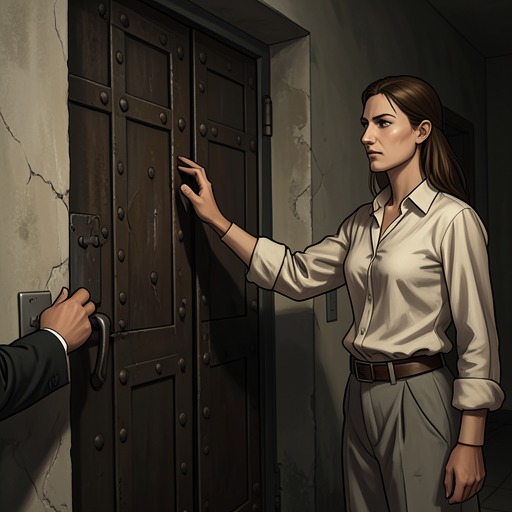
Jada describes a disorienting cycle in which Decker could be attentive one moment and furious the next. He might bring home takeout for a quiet evening, then berate her and corner her during an argument. Jada says he had never hit her, but she feared what might happen when he came home angry; even ordinary time alone in the house could become a source of dread.
The instability made it difficult for Jada to leave. Decker appealed to her insecurities and the practical costs of starting over with little, while invoking their shared life, the possibility of having a family, and the promises she had made at their wedding. Each time Jada found the nerve to go, his behavior changed and prompted her to reconsider. She describes this repeated uncertainty as exhausting and confusing, not as a single dispute but as a pattern that kept her questioning her own decision.
Jada had suspected Decker was unfaithful for some time, but suspicion became certainty when she discovered him with their neighbor, Sarah. The discovery ended the cycle of reconsideration: Jada called a friend and moved her belongings to the friend’s home that night after Decker left for work. She chose that refuge in part because the friend’s husband was a professional fighter and she was unsure how Decker would react. Decker then alternated between pleading for her to return and cursing her, and once appeared at the home during a drunken episode. He did not return after an encounter with the friend’s husband, but continued to complicate Jada’s life by fighting the divorce.
Separation and Reclaimed Agency
When Jada later faces Decker in a park, she rejects his claim that she had not wanted the marriage to work. She recalls the nights she spent afraid he would burst through the door in a rage and the repeated infidelity she had endured before discovering him with Sarah. Her response acknowledges both what Decker did and how long she had tried to preserve the marriage: she had ignored too much in the name of making it work, only to feel made a fool of.
The confrontation changes the balance between them. Jada tells Decker not to use her name to silence or redirect her, and challenges what he can do to her now that she is no longer his wife or girlfriend. When he insists that she will always belong to him, she points to the legal document that says otherwise. The exchange makes the divorce more than a change in status: Jada openly disputes Decker’s continuing claim over her and recognizes that she had allowed his treatment to make her feel worthless.
The Marriage’s Afterlife
The separation does not erase the marriage’s emotional effects. After a nightmare, Jada wakes sweating and searches the room, expecting to see Decker’s wild eyes or smell whiskey. She believes she can hear him yelling as he used to, and has to close her eyes against the memories. The past returns through fear and recollection even when Decker is absent.
That history also becomes a measure against which Jada interprets her relationship with Cane. When Cane seems to withdraw, she tells Heather that the slow distance recalls how the end began with Decker. Heather cautions her against treating Cane as equivalent to Decker, emphasizing the difference between the two men rather than allowing Jada’s former marriage to determine the meaning of every change in a new relationship. Jada accepts the caution while admitting that her relationship with Cane has moved quickly and that she fears losing control of the situation.
Later, Jada explains that Cane’s concealment and distance have revived fears formed in her marriage. She is distressed not only by the danger that sends her out of town, but also by the possibility that Cane himself may be in danger and by seeing Ashley in his office. When Cane urges her to return to Arizona and act as though things are fine, Jada resists. She says she has not had time to process what has happened and cannot simply repeat the pattern of accepting apologies after Decker lied and hid things from her. She distinguishes learning from her former marriage from punishing Cane for Decker’s conduct: the experience has changed how she responds when she recognizes similar behavior.
Significance
Jada and Decker’s relationship establishes both the conditions she leaves and the caution she carries afterward. Its defining conflict is not only infidelity but the cumulative erosion of her confidence through intimidation, reversal, and appeals to obligation. Leaving, speaking back, and invoking the divorce document each contest Decker’s attempt to retain authority over her. At the same time, the nightmares and her vigilance in later intimacy show that legal separation and renewed agency do not instantly undo the damage. The relationship’s lasting consequence is therefore double: Jada has reclaimed the right to refuse Decker, yet must still learn how to distinguish present risks from the fears his marriage left behind.